

07 Aug Commercial HVAC Maintenance Tips Every Business Owner Should Know
For many businesses, the HVAC system is one of the most important—and expensive—pieces of equipment in the building. Whether you operate an office, retail store, restaurant, medical facility, school, warehouse, or industrial property, a reliable heating and cooling system keeps employees productive and customers comfortable.
Unfortunately, many business owners don’t think about their HVAC equipment until something goes wrong. Unexpected breakdowns can interrupt operations, create uncomfortable working conditions, and lead to costly emergency repairs.
Partnering with experienced commercial HVAC contractors and following a preventative maintenance schedule is one of the smartest ways to protect your investment and keep your business running smoothly.
Why Preventative Maintenance Matters for Commercial Buildings
Commercial HVAC systems often operate much longer than residential equipment. In South Texas, many systems run nearly every day to combat the region’s long cooling season and high humidity.
Routine maintenance helps:
- Reduce unexpected equipment failures
- Improve energy efficiency
- Lower monthly operating costs
- Extend equipment lifespan
- Maintain comfortable indoor temperatures
- Improve indoor air quality
- Reduce costly emergency repairs
Regular inspections allow technicians to identify developing issues before they become expensive disruptions.
Keep Employees Comfortable and Customers Happy
A comfortable building creates a better experience for everyone who walks through your doors.
Poor HVAC performance can affect:
- Employee productivity
- Customer satisfaction
- Equipment reliability
- Indoor air quality
- Overall operating costs
Signs your commercial HVAC system may need service include:
- Hot and cold spots
- Weak airflow
- Loud or unusual noises
- Musty odors
- Rising humidity
- Thermostat inconsistencies
Ignoring these warning signs often leads to larger repairs that are more expensive and more disruptive to your business.
Lower Energy Costs Through Routine Maintenance
Heating and cooling are often among the largest monthly utility expenses for commercial properties.
Even a small decline in HVAC efficiency can have a noticeable impact on your operating budget.
Professional maintenance improves efficiency by ensuring your system is clean, properly adjusted, and operating as designed.
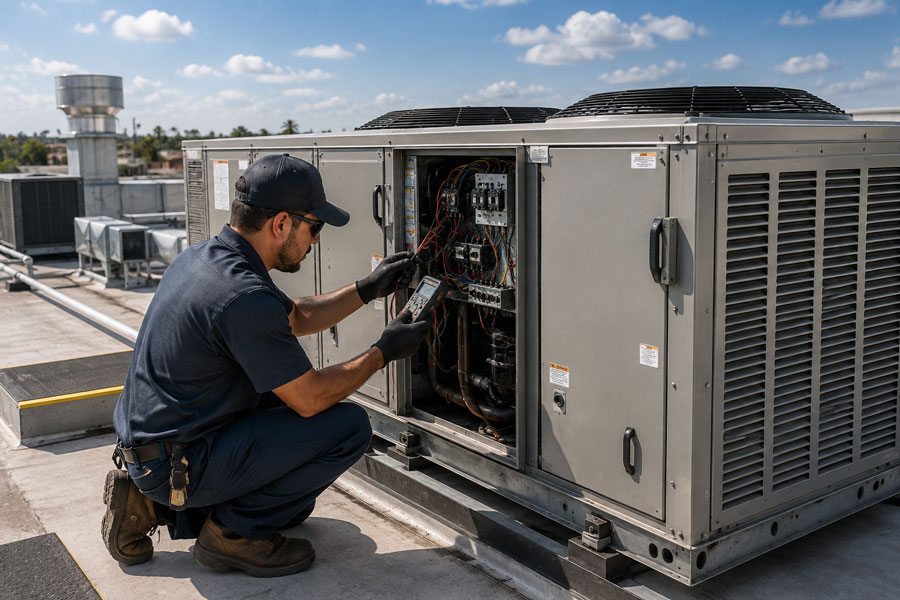
A commercial maintenance visit may include:
- Cleaning condenser and evaporator coils
- Inspecting electrical components
- Checking refrigerant levels
- Tightening electrical connections
- Lubricating motors and bearings
- Inspecting belts and pulleys
- Calibrating thermostats
- Verifying airflow throughout the building
When every component works efficiently, your system uses less energy while providing more consistent comfort.
Don’t Overlook Air Filter Maintenance
Replacing air filters is one of the simplest ways to improve HVAC performance.
Dirty filters restrict airflow, forcing your equipment to work harder while increasing energy consumption.
Depending on your facility, filters may require replacement every one to three months.
Businesses with:
- High customer traffic
- Manufacturing operations
- Warehouses
- Construction dust
- Medical facilities
often require more frequent inspections.
Clean filters also improve indoor air quality by reducing:
- Dust
- Pollen
- Mold spores
- Airborne particles
- Other contaminants
Cleaner air creates a healthier environment for both employees and customers.
Plan Ahead Instead of Reacting to Breakdowns
Emergency HVAC failures rarely happen at convenient times.
Most occur during the hottest days of the year—when your equipment is working the hardest and service demand is at its highest.
A preventative maintenance program helps you:
- Identify worn components early
- Budget for planned repairs
- Reduce unexpected downtime
- Improve equipment reliability
- Extend the life of your HVAC investment
Many businesses schedule maintenance during the spring and fall to prepare for seasonal demands while minimizing disruptions to daily operations.
Why Businesses Across the Rio Grande Valley Trust Hess Air
For more than 50 years, Hess Air has provided dependable commercial HVAC services for businesses throughout the Rio Grande Valley. From office buildings and retail spaces to restaurants, healthcare facilities, schools, and industrial properties, our experienced technicians understand the unique demands placed on commercial HVAC systems in South Texas.
Whether you need preventative maintenance, emergency repairs, or a long-term service plan, Hess Air delivers reliable solutions designed to keep your business operating efficiently year-round.
Schedule Commercial HVAC Maintenance Today
Routine maintenance is one of the most effective ways to reduce operating costs, improve energy efficiency, and avoid unexpected equipment failures.
Partnering with experienced commercial HVAC contractors helps protect your investment while creating a comfortable environment for employees and customers alike.
If your business is due for maintenance, contact Hess Air today to schedule professional commercial HVAC service anywhere in the Rio Grande Valley.
Frequently Asked Questions
How often should a commercial HVAC system be serviced?
Most commercial HVAC systems should be professionally inspected at least twice a year. Businesses with heavy equipment usage or specialized environments may benefit from quarterly maintenance.
Does preventative maintenance reduce operating costs?
Yes. Routine maintenance improves system efficiency, reduces energy consumption, and helps prevent expensive emergency repairs that can interrupt business operations.
What businesses benefit from commercial HVAC maintenance?
Preventative maintenance is valuable for offices, retail stores, restaurants, schools, medical facilities, warehouses, manufacturing plants, and virtually any commercial property that relies on heating and cooling equipment.